Rebuilding a Smile Affected by Facial Synkinesis
Restoring a joy expressing smile following Lyme disease associated facial palsy.
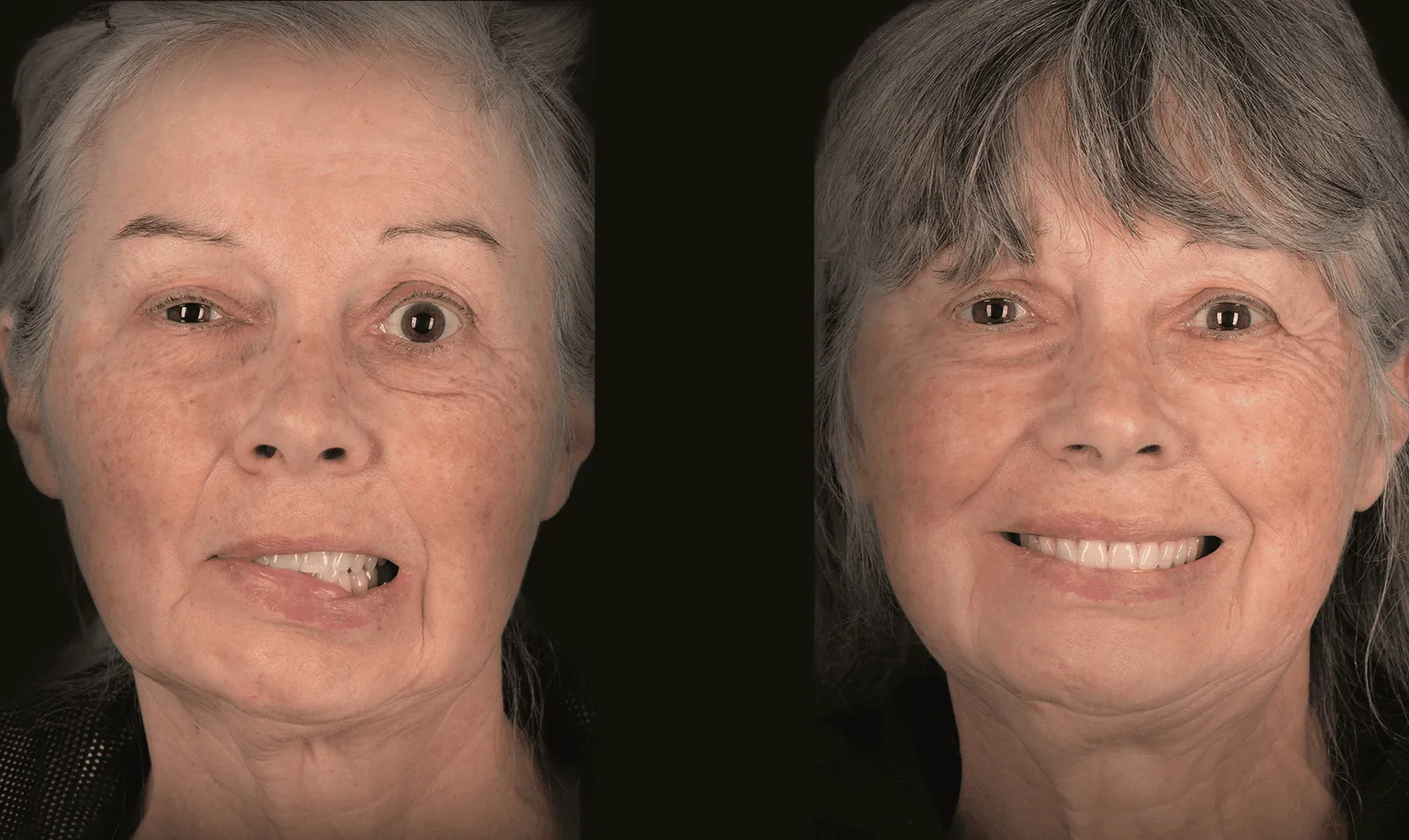
At a Glance
The Challenge
Following facial paralysis caused by Lyme disease, this patient developed a condition called "synkinesis." This occurs when recovering facial nerves rewire incorrectly, causing unwanted muscle movements (e.g., the eye closing when trying to smile) and a tight, restricted smile that was difficult to control.
The Solution
To bypass the miswired nerves and provide a strong, independent smile, Dr. Jowett performed a gracilis muscle transfer. A small, precise strip of muscle was taken from the inner thigh and transplanted to the face. This new muscle was connected to a healthy nerve source, giving the patient a new mechanism to smile that is separate from the uncoordinated facial movements.
Technical Insight
Procedure: Free functional gracilis muscle transfer for smile reanimation.
Surgical Note: In cases of severe synkinesis where chemodenervation (Botox) and therapy are insufficient, introducing a new neuromuscular unit can overpower the antagonist forces of the synkinetic muscles. The gracilis muscle is harvested as a free flap and reinnervated, typically using the masseteric nerve or a cross-facial nerve graft, to provide a powerful, independent excursion of the oral commissure.
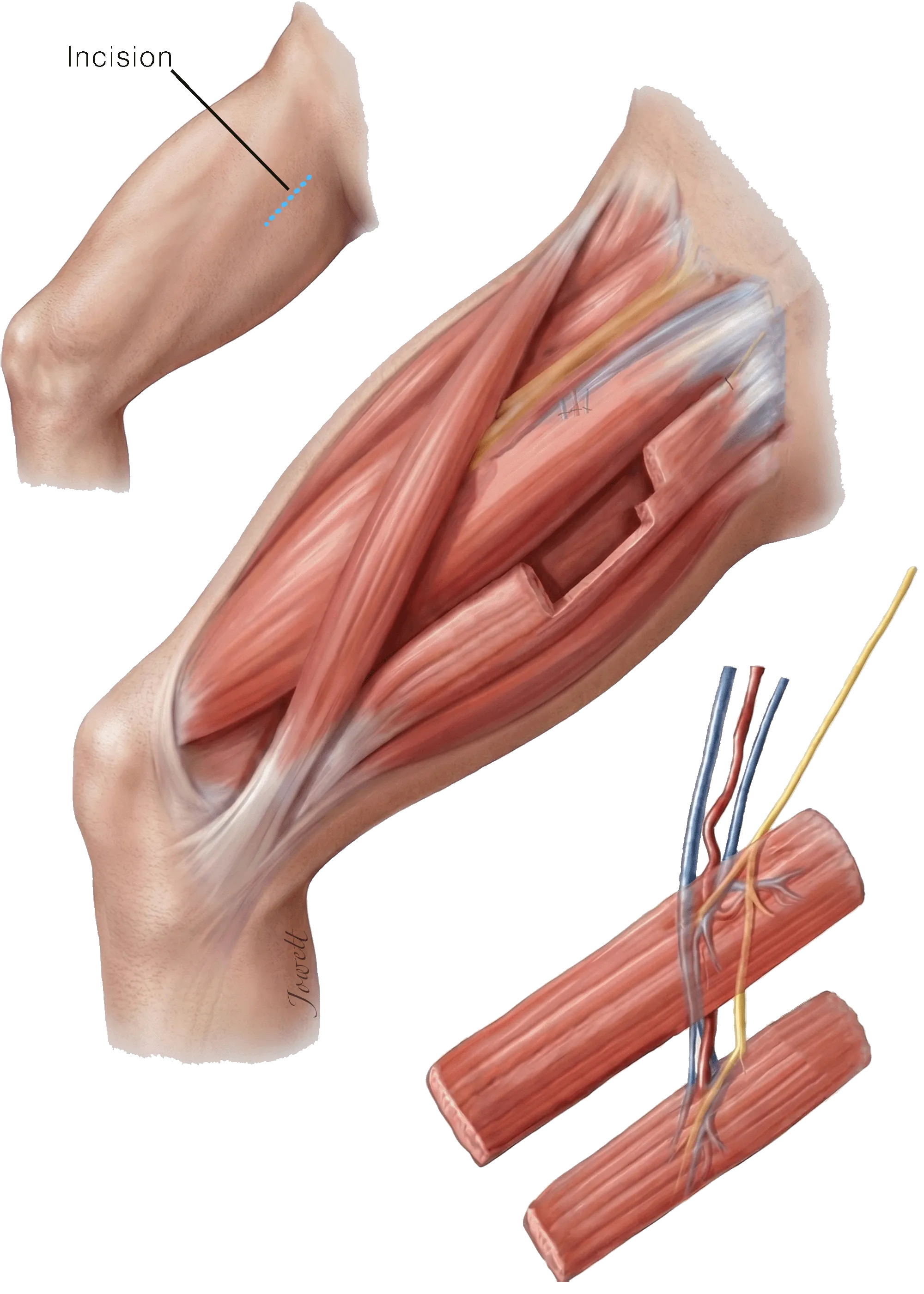
Gracilis Muscle Flap Harvest (Dual-Vector)
Through a small (3-inch) incision on the upper inner thigh, thin strips of muscle connected by an artery, vein, and nerve are meticulously dissected and transplanted to the face.
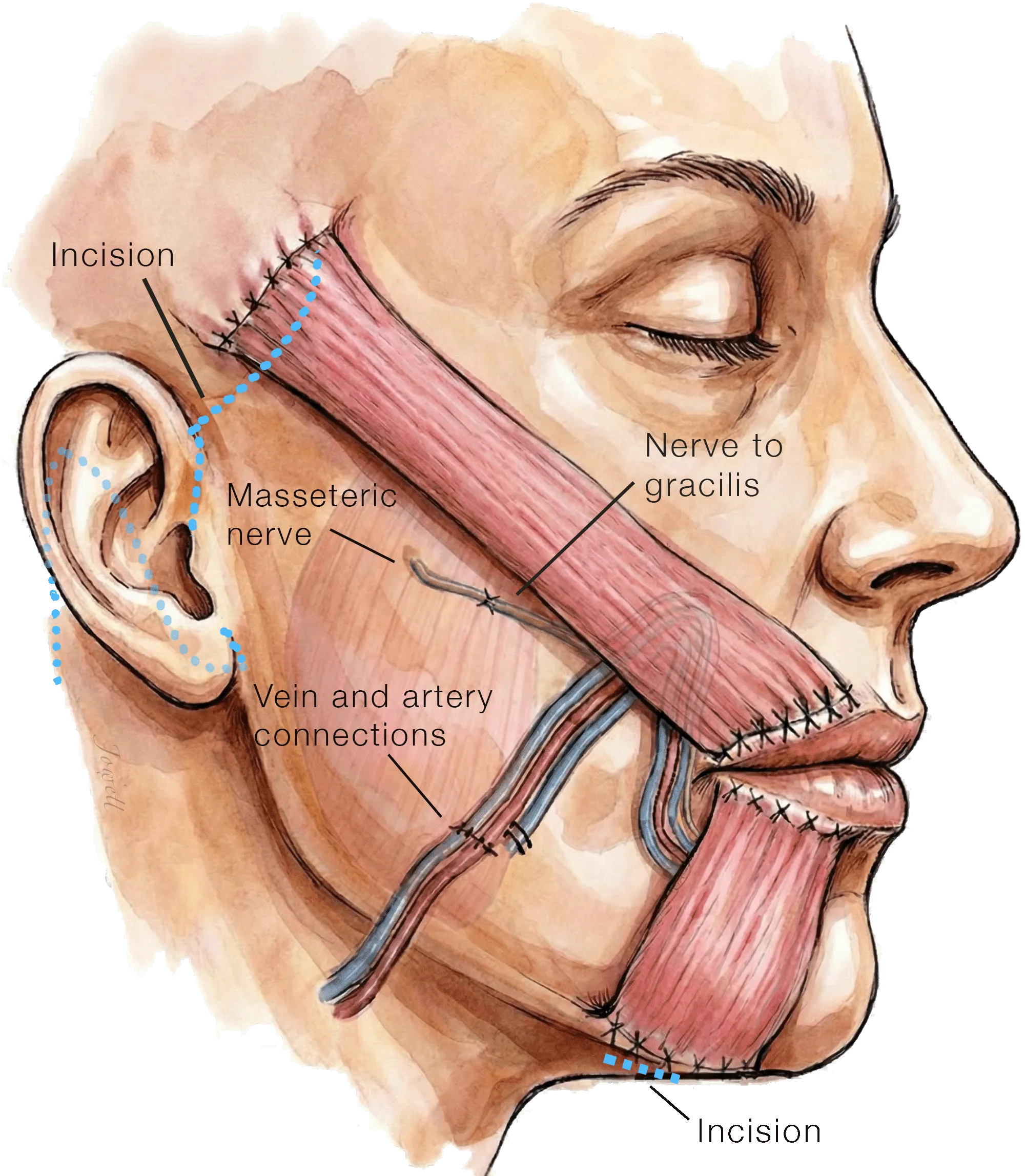
Dual-Vector Free Gracilis Muscle Transfer for Smile Reanimation Neurotized by Ipsilateral Masseteric Nerve
The small strip of muscle from the thigh is carefully placed into the face to rebuild the smile. This is done through a well-camouflaged facelift incision that extends behind the ear, along with small incisions inside the mouth and under the chin. The muscle’s artery and vein are then connected to blood vessels in the face, and its nerve is connected to a nerve branch controlling one of the chewing muscles (masseteric nerve). Over the next several months, chewing nerve fibers grow into the transferred muscle, allowing the patient to trigger a smile on the affected side by biting down.
The Outcome
Shown just 6 months after surgery, the patient has regained a fuller, more symmetrical smile. The new muscle allows for a smile that engages naturally with emotion, significantly improving facial balance and social confidence.